If you received one of these in the mail…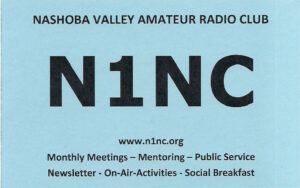 Click on the card
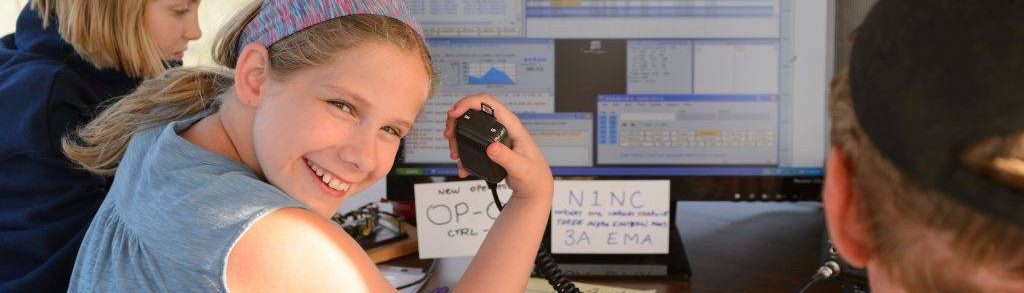
If you received one of these in the mail…Click on the card
The Nashoba Valley Amateur Radio Club’s January meeting is Thursday, January 15th, at 7:30 PM at the Pepperell Community Center (in Pepperell). We start gathering at 7 PM to socialize before the meeting starts.
January is traditionally “Short Subjects Night”. Club members and guests are offered the opportunity to stand up and talk for 15 to 20 minutes about any subject you think club members would find interesting. Feel free to just come and listen, but please come and share your knowledge regarding a subject that you would like to share with others.
I look forward to seeing you there.
NVARC recently completed our first ever General upgrade class, with our first volunteer exam (VE) session at the completion of the classes. We would like to congratulate the following upgrades to General class:
Kartik, K1AKP
Dan, KB1OPO
Ottavio, KC1PFU
Libby, KC1RKH
John, KC1VTD
Patrick, KC1WNU
Matt, KC1YLN
Phil, KC1YNF
John, W1JHK
Additionally, Patrick, KC1WNU, and John, W1JHK, also upgraded to Extra class! And John, KC1YTJ, who participated in our recent Technician license classes, passed the Technician exam at the exam session.
Please congratulate all the participants. And thanks to all those who helped with the license classes and the VE session.
NVARC completed a very successful licensing class in October, with 15 new hams getting their licenses. With the recent government shutdown it took a while for everyone to get their callsigns, but I think everyone now has theirs. Please join me in congratulating the following new hams:
Kartik KC1YHU – Now K1AKP
Tom KC1YJL
Jon KC1YJM
Moe KC1YKN
Dot KC1YKR
Kara KC1YLA
Matt KC1YLN
Kiirja KC1YLO
Janette KC1YLP
Mark KC1YLQ
Paul KC1YMR
Phillip KC1YNF
Wendy KC1YNO
Scott KC1YON
John KC1YTJ
A number of these new hams have checked into the Monday night net, have attended NVARC meetings, and are generally active on the air! Please join me in welcoming them to Amateur Radio and please keep an eye (or ear) out for them!
Thanks to Bruce, K1BG, Les, N1SV, and Bob, N1DVC, for their dedication in helping with the classes.
The Nashoba Valley Amateur Radio Club held its annual Homebrew / Show & Tell Night on December 18th with numerous members displaying their different projects. It was interesting to see what everybody was working on and here are three projects that really caught my eye.
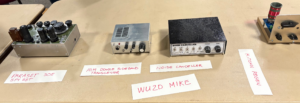
Mike WU2D & Mark WA1QHQ displayed a number of different projects they had designed and built including a Noise canceller & a Paraset spy radio. Mike explained his replica of a WWII Paraset spy radio and how it was used. Originally built by the British it was used for clandestine radio communications in France. The word Paraset is a combination of “radioset” & “parachute”. Paraset radios were dropped by parachute behind enemy lines. Mike & Mark have agreed to come back on March 19th, 2026, to provide a more detailed presentation on spy radios, their history and how they work.
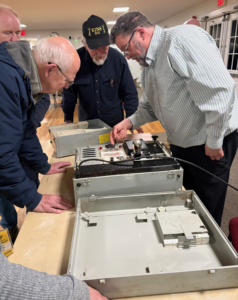
Phil W1PJE, brought in an old Western Electric automated tube tester from the 1960s. While tube testers aren’t that unusual, automated ones from that time are. Phil explained how punch cards were inserted into the instrument to configure the specific electrical parameters for each tube. The automated tube tester was built into a rugged metal suitcase so it could presumably be tossed in the back of a truck. Phil also displayed the companion library of old punch cards housed in a smaller rugged metal suitcase.
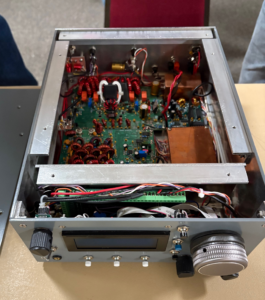
Tom W1PKX brought in his PKX40 transceiver that he designed and built. Tom explained many of the features of this high performance 40w transceiver and some of his recent improvements. I was blown away by some of the CW performance specifications of this transceiver and how they were similar to some top commercial radios. For more information on this project and others that Tom has made you can look him up on QRZ.com.
Les, N1SV